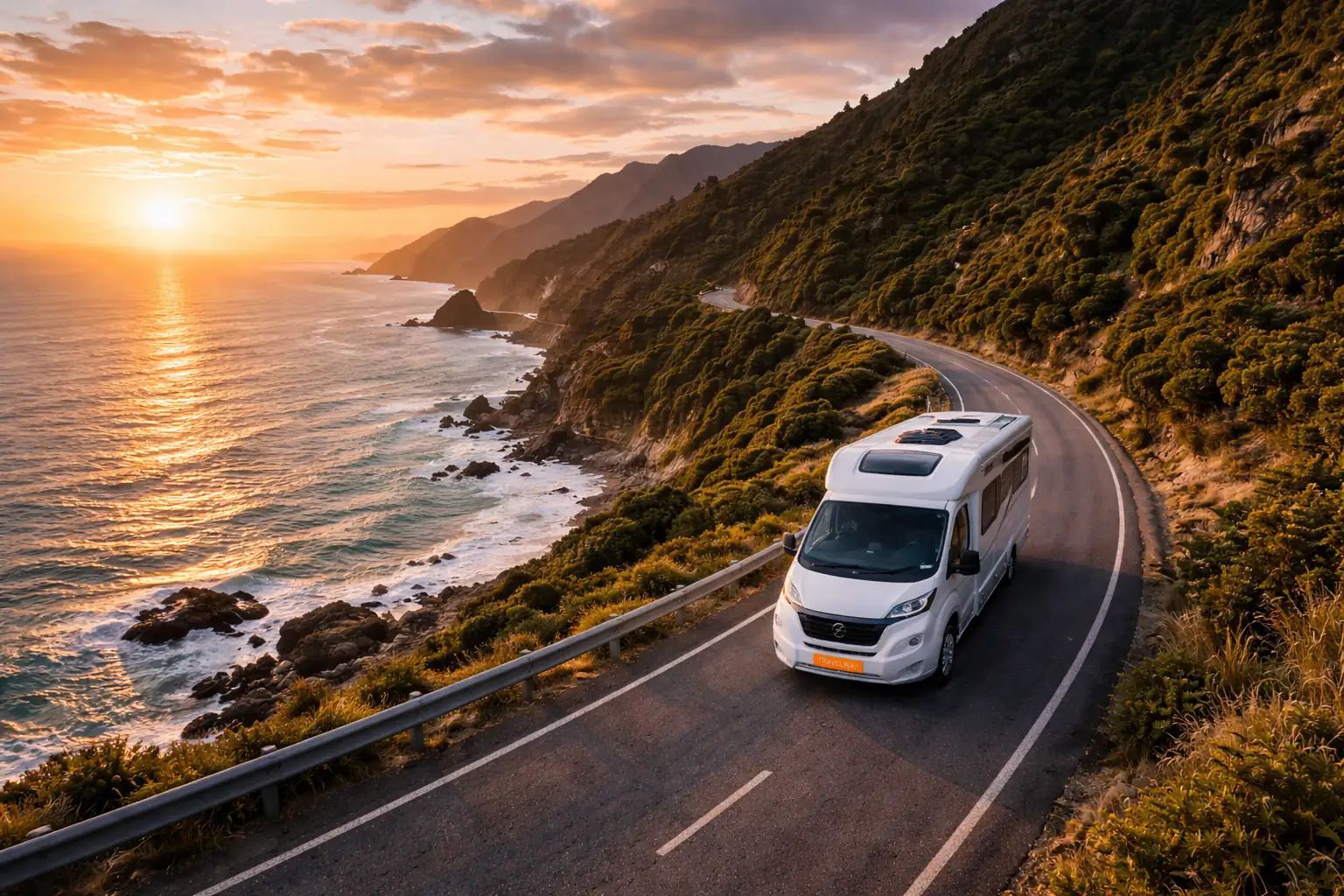
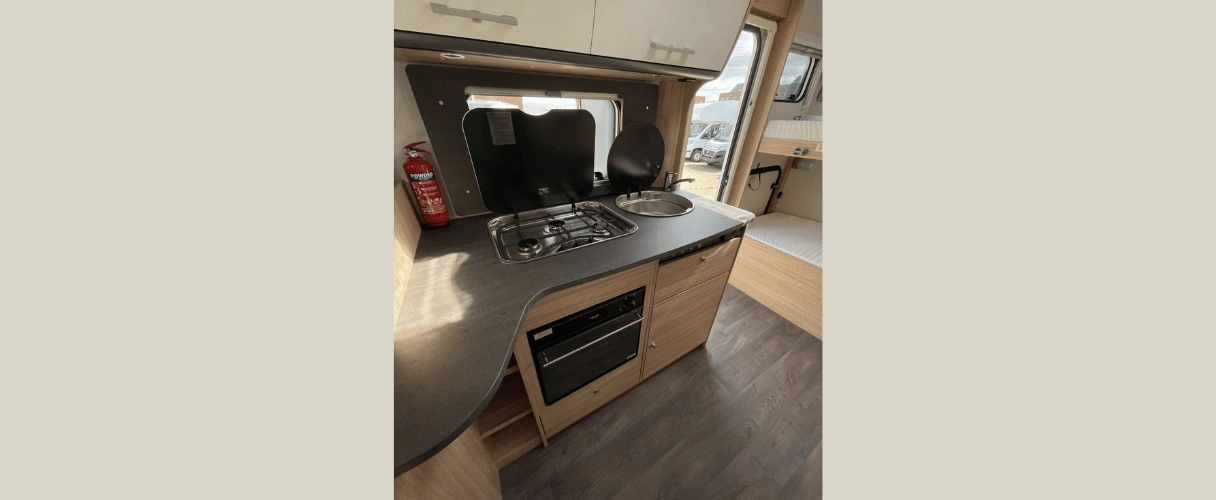
If you have been reading American motorhome sites, you will have come across Class A, Class B and Class C. Those are not licence classes and they do not mean anything to New Zealand law.
They describe the shape of the vehicle. Here is how they translate, and what actually decides what you can drive here.
What the American classes describe
- Class A is the big bus-shaped one, with a flat front and no separate cab
- Class B is a van conversion, a campervan you could park in a normal space
- Class C sits in between, built on a van chassis with a bed pod over the cab
They are useful shorthand for size and layout. They have nothing to do with what is on your licence.
What we actually hire
European motorhomes use their own names for the same shapes, and we hire two of them.
- The Sunlight A72 has a bed pod over the cab. An American site would call this shape a Class C
- The Dethleffs Just90 EB and Dethleffs Trend 7057 EB are low-profile, so the roofline stays low over the cab and the extra bed drops down from the ceiling instead
All three are built on a Fiat Ducato, all three are around 7.4 metres, and all three sleep four.
What decides your licence in New Zealand
Weight, and nothing else. The body shape is irrelevant.
A full New Zealand car licence covers vehicles up to 6,000kg. A low-profile and an overcab of the same weight need exactly the same licence.
Every motorhome in our fleet sits under that line, so a car licence covers all of them. The full detail is in can you drive a motorhome on a car licence.
So which shape should you pick?
Not a licence question, a comfort one.
The overcab Sunlight gives you a permanent king bed upstairs and bunks for the kids, which is why families take it. The two low-profile Dethleffs sit lower, feel closer to a large van to drive, and suit couples who want the space downstairs.
Have a look at the three motorhomes, or get a quote and Nico will match one to your trip.